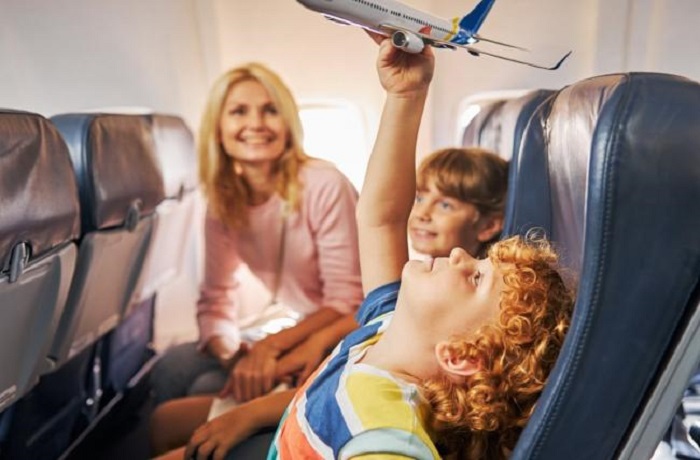
Any parent who has flown long-haul with small children knows the particular dread of it. The countdown of hours. The negotiations over the screen. The moment somewhere over the ocean when the toddler decides, with total commitment, that they are Done Now. We obsess over packing the right snacks and downloading the right cartoons — and then book whichever flight was cheapest, on whatever aircraft happened to be flying, never realizing that the machine itself is one of the biggest variables in how the whole ordeal goes.
It is not the same on every plane. Here’s what actually moves the needle when you’re traveling with kids — and most of it is decided by the aircraft, not the airline’s family-friendly marketing.
The bassinet question
For anyone flying with a baby, the single most important feature on a long-haul flight is the bassinet — the cot that clips to a bulkhead wall so your infant can sleep flat instead of on your arms for ten hours. Here’s the catch: the number of bassinet positions, where they are, and the weight limit all depend on the aircraft type and its specific cabin layout. Some widebodies have several bulkhead rows fitted for them; others have barely any. Book the wrong aircraft and there may be no bassinet seat left to request at all. This alone is worth checking the plane for before you book, not after.
Quiet cabins make calmer kids
The newer composite-built widebodies run noticeably quieter and hold the cabin air at a lower, more humid “altitude.” For adults that means less jet lag. For a small child it can mean the difference between sleeping through the night portion of the flight and being wired, fussy, and overtired the whole way. A calmer cabin is a calmer kid, and the aircraft type is what determines how calm the cabin is.
Room to squirm
Children do not sit still, and the width of the seat — and the space to wedge a car seat or let a toddler stand and wiggle at the bulkhead — varies a lot between aircraft and configurations. The same model flown nine-across is meaningfully roomier than the version crammed ten-across. When you’re sharing your personal space with a small human who treats your lap as a trampoline, that inch and a half per seat matters more than almost anything.
The little details that save a trip
Seatback screens versus bring-your-own: older aircraft may have no built-in entertainment, which is fine if you’ve loaded a tablet but a crisis if you forgot the charger. Changing-table-equipped lavatories aren’t on every aircraft. Power outlets at the seat — for keeping that tablet alive — are far from universal on older fleets. None of this is exotic, but every one of these is determined by which plane you’re on.
How to actually check before you book
This is the frustrating part: mainstream booking sites bury the aircraft type, so the very thing that determines bassinet availability, cabin comfort, and seat room is the hardest detail to find. You end up sorting by price, booking blind, and discovering the layout only at the gate.
It’s far less stressful to start from the aircraft. Using a flight search that lets you see which aircraft is flying your route before you book, you can steer toward the newer, quieter, bassinet-friendly widebody on your city pair — then go request that bulkhead seat with confidence. Ten minutes of checking the plane can save you the longest night of your parenting life.
The honest takeaway
You can’t control whether your toddler melts down at hour seven; that’s beyond any technology. But you can stack the odds. A quieter cabin, a flatter little bed, a bit more room, a screen and a power outlet — those are real, and they all ride on the aircraft you choose. Pick the plane with the family in mind, and the long-haul stops being something you merely survive.