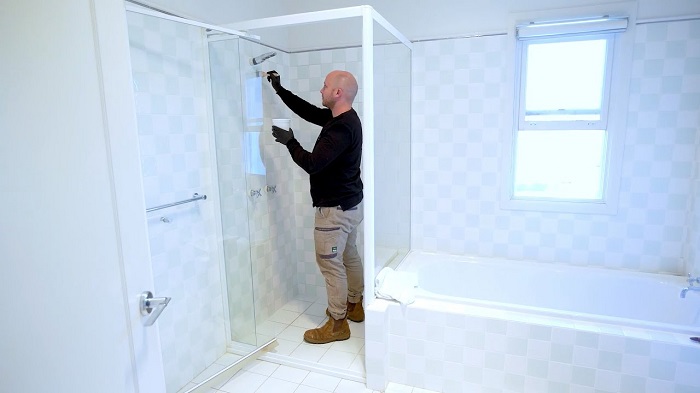
Installing a shower enclosure requires precise measurements, a level foundation, and careful connection of utilities: the tightness, safety, and service life of the equipment depend on this.
A properly assembled enclosure will not leak, creak, or “wobble” under load. Below are practical rules to help avoid common installation and bathroom remodeling mistakes.
Preparing the Site and Inspecting the Kit
Before starting work, ensure the room is ready: waterproofing is complete, water and sewer lines are connected, and valves and inspection windows are accessible. If you’re planning a bathroom remodel, consider the shower enclosure’s location in relation to the risers, ventilation, and electrical systems in advance.
Check the complete set: shower tray, traps and corrugated pipes/pipes, posts/frame, walls and doors, fasteners, seals, casters, faucet/panel (if applicable), instructions, and warranty documents.
- Check the opening dimensions and shower tray dimensions against the product data sheet.
- Assess the condition of the floor and walls: any unevenness, voids, or fragile tiles.
- Prepare the necessary tools: level, tape measure, drill, sanitary sealant, wrenches, screwdrivers, knife, and marker.
Selecting a location and checking dimensions, taking into account door openings
Before installing the shower enclosure, choose a location that allows for easy access and maintains normal bathroom circulation. It’s important to consider not only the dimensions of the tray and back panels, but also how the door will open in the actual space.
Checking the dimensions should include an assessment of the clear space in front of the entrance, intersections with plumbing fixtures and furniture, and accessibility to the siphon, connections, and fasteners. If in doubt, it’s best to adjust the layout in advance or choose a different door type.
What to check before making a final location selection
- Floor dimensions: compare the tray size with the actual installation area, taking into account baseboards, overhangs, frames, and wall unevenness.
- Height and overhead trim: ensure the cabin is at the correct height, taking into account the ceiling, ventilation, light fixtures, and any possible slope.
- Clear opening area: the door should not abut against a sink, toilet, heated towel rail, washing machine, cabinet, or radiator.
- Door type: hinged doors require more space in front of the entrance; sliding doors save space but require precise geometry and clear guides; Folding shower trays can be a compromise in tight spaces.
- Passageways and safety: provide a comfortable passageway, eliminate the risk of door slams and injuries when entering/exiting on a wet floor.
- Access to utilities: provide the ability to inspect the drain trap and connections without disassembling the entire shower cabin (hatch, removable panel, side access).
- Make markings: draw the outline of the shower tray on the floor and mark the entry point.
- Simulate opening: mark the arc of the swing door or the actual travel area of the sliding door, check for intersections.
- Check clearances: ensure the doors open freely and do not hit walls, faucets, holders, or protrusions.
- Check orientation: If possible, change the opening side (left/right) before purchasing or Before assembly.
- Fix your decision: only after checking the dimensions and door openings should you proceed to preparing the foundation and connecting the door.
Bottom line: the right location for a shower stall is determined not only by its dimensions, but also by the actual door opening, ease of passage, and accessibility. The more accurately the dimensions and openings are verified during the planning stage, the lower the risk of rework and the more comfortable daily use will be.