At the Eiffel Tower, the destination and the method of ascent are separate purchasing decisions. Visitors must choose between the second floor and the summit, then decide whether to begin by lift or stairs. The floor printed on the ticket is final. A second-floor ticket cannot be upgraded to summit access during the visit.
This distinction matters in 2026 because summit lift tickets for popular times can sell out well in advance. The highest level may also close temporarily because of wind, technical requirements or capacity restrictions. Comparing the ticket categories before selecting a date prevents an expensive booking mistake.
Eiffel Tower Ticket Types and Prices in 2026
Four standard ticket categories are available. The following adult prices apply during the 2026 tariff period.
| Ticket type | Adult price | Route |
|---|---|---|
| Second floor by lift | EUR 23.50 | Lift from the ground to the second floor |
| Summit by lift | EUR 36.70 | Lift to the second floor, then a separate summit lift |
| Second floor by stairs | EUR 14.80 | 674 steps from the ground to the second floor |
| Summit by stairs and lift | EUR 28.00 | Stairs to the second floor, then lift to the summit |
Reduced prices apply to visitors aged 12-24, children aged 4-11 and eligible disabled visitors. Children under four enter free but still need an individual ticket. Identification or evidence of eligibility may be checked.
For an independent comparison of the four admission formats, consult the Eiffel Tower Tickets Guide before choosing a level and time.
Summit or Second Floor: Which Ticket Should You Choose?
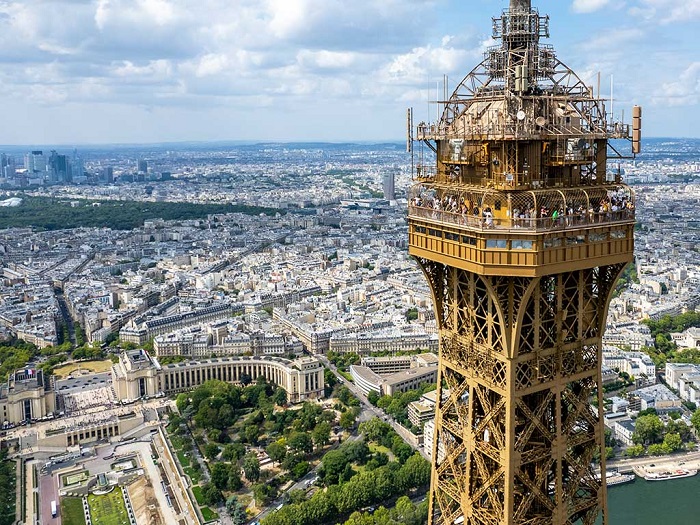
The summit provides the complete vertical journey and the widest view. Visitors take one lift to the second floor and transfer to another for the final ascent. The upper area has an enclosed section and an open-air platform approximately 276 metres above the ground.
At this height, the broad geography of Paris becomes visible. The Seine can be followed across the city, La Défense appears to the west, and the dense historic centre can be read within the wider metropolitan landscape. Visibility depends on weather, so haze may reduce distant detail.
The second floor offers a closer relationship with the city. Bridges, avenues, rooftops and individual monuments are easier to distinguish. It is often the more useful level for architectural photography and requires less time than a summit visit.
Choose the summit when reaching the highest public platform is central to the experience. Choose the second floor for a shorter visit, a lower price or clearer views of nearby landmarks. Both tickets include the first floor, which should be explored during the descent.
The summit and stairways are not accessible to people with reduced mobility. Discount eligibility and physical accessibility are separate matters, so visitors with mobility restrictions should select the second-floor lift option.
Lift or Stairs: What the 674-Step Climb Involves
The public staircase reaches the second floor in 674 steps. Most visitors need approximately 30 to 45 minutes for the climb, depending on fitness and the number of stops. The landings provide space to rest and expose details of the iron framework that are difficult to notice from a lift.
The stairs ticket is the least expensive option. It works well for active adults and older children who want the ascent to form part of the visit. The route passes the first floor, where visitors can stop before continuing upward.
Public stairs do not continue from the second floor to the summit. Visitors who want to combine the climb with the highest platform must purchase the stairs and lift ticket from the beginning. A second-floor stairs ticket cannot be supplemented with a summit ticket later.
The climb is not recommended for visitors in poor physical condition or families with babies and very young children. Large luggage is prohibited, and the Tower has no left-luggage facility.
Booking Rules, Security and Visit Timing
Lift e-tickets are normally released up to 90 days in advance, while stair-access tickets can be released up to 60 days ahead. Demand is strongest from June to September, during French school holidays and around public holidays.
The date, time and floor cannot be changed after a purchase is confirmed. Tickets are also non-exchangeable and non-refundable. Check every element of the order before payment, including the selected level and age category.
No standard ticket bypasses all queues. A time-stamped e-ticket avoids the ticket office and provides access to designated lines, but every visitor must complete security checks. Allow 15 to 20 minutes to pass the first checkpoint before reaching the esplanade. At the time printed on the ticket, the visitor should already be beneath the Tower in the appropriate lift or stairs queue.
If online tickets are sold out, admission may still be available from the on-site ticket offices for immediate entry. Availability is not guaranteed, and summit sales can pause when the upper level reaches capacity. Stairs tickets are often a practical alternative when lift tickets are unavailable.
The visit should begin at the highest level included in the ticket. Summit visitors should go to the top first, return to the second floor and finish on the first. Allow at least 1.5 hours for the first and second floors and approximately 2.5 hours for a summit visit. Security and ticket-office queues must be added separately.
The best ticket depends on what the visitor wants to understand. The summit reveals the scale of Paris, the second floor provides sharper urban detail, and the stairs expose the engineering behind the monument. Making that choice before booking is essential because the ticket cannot be modified or upgraded after purchase.